







Floods Have Affected 1.9 Million Africans Since October 2025
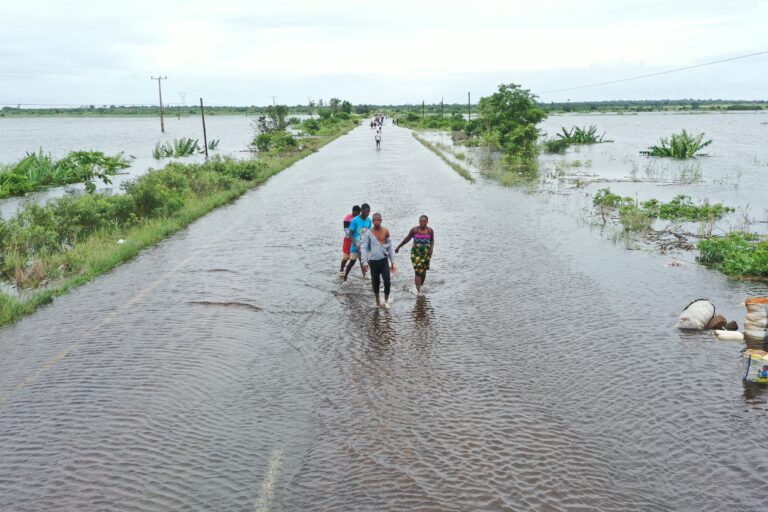
Massive flooding in Mozambique. X/@AJEnglish.
February 25, 2026 Hour: 2:03 pm
🔗 Comparte este artículo
The continent has transitioned from drought caused by El Niño to intense rainfall linked to La Niña.
On Wednesday, the United Nations Office for the Coordination of Humanitarian Affairs (OCHA) reported that at least 374 people have died and nearly 1.9 million have been affected by floods and cyclones in southern Africa since October 2025.
RELATED:
Mozambique: 185 Dead and 844,932 Affected by Floods
The organization explained that the region transitioned from drought caused by the climate event ‘El Niño’ in 2023-2024 to intense rainfall and flash floods linked to ‘La Niña’ in 2025-2026, which affected Mozambique, Madagascar, South Africa, Zimbabwe, Malawi, and Zambia.
The climate phenomena are opposite phases of the El Niño-Southern Oscillation (ENSO) cycle. El Niño warms ocean waters and causes droughts, while La Niña cools oceans, generates winds, and produces opposite climatic effects.
According to the UN agency, 723,000 of the nearly 1.9 million people affected were impacted by floods in Mozambique, and more than 681,000 by cyclones in Madagascar.
In addition, some 175,000 people were forcibly displaced, 1,400 were injured, and 293,000 homes were damaged. OCHA recalled that severe floods caused loss of livelihoods and crops, especially in Mozambique and Madagascar.
With more rain forecasted until June, the agency warned that the risk of flooding remains high, exacerbating food insecurity, disease outbreaks, and slowing recovery efforts in affected communities.
Humanitarian partners are working with African governments to provide life-saving assistance, including food, clean water, sanitation, emergency medical care, and temporary shelter. However, they face significant challenges due to limited funding.
Ross Smith, Director of Emergency Response at the World Food Programme (WFP), noted that the humanitarian body has 40% less funding available than a year ago, which “tests” their ability to provide a large-scale response.
Damaged roads and bridges have also hampered humanitarian access and isolated communities, delaying aid deliveries and complicating the international response for the recovery of affected African populations.
teleSUR: JP
Source: EFE